What makes one Napa estate capture attention across borders while another struggles to stand out? In a market defined by rarity, global buyers are not just comparing square footage or finishes. They are weighing provenance, privacy, lifestyle, and long-term value. If you are preparing to sell a Napa estate, understanding how global marketing really works can help you position your property more effectively and reach the right audience with confidence. Let’s dive in.
Napa is unusually well suited for international marketing because it is both globally recognizable and tightly limited in supply. Napa Valley Vintners describes the region as just 30 miles long and 5 miles wide at its widest point. The same source notes that it produces only 4% of California’s wine grape harvest and 0.4% of the world’s wine production.
That scarcity matters when you are marketing a luxury estate. Buyers at the top end of the market often respond to places that feel hard to replicate, hard to access, and hard to replace. Napa’s limited geography, established wine culture, and protected land base all help support that story.
Another important factor is the Napa Valley Agricultural Preserve. Established in 1968, it has protected more than 32,000 acres, and no land has ever been removed from the Preserve. For sellers, that creates a powerful backdrop for positioning an estate as part of a region shaped by long-term land stewardship.
Napa also carries strong place recognition beyond real estate. Visit Napa Valley reports 3.7 million visitors, $2.5 billion in visitor spending, $107.5 million in local tax revenue, and about 16,000 tourism jobs, with tourism identified as Napa County’s second-largest employer after wine. In simple terms, many affluent buyers already know Napa as a destination, which makes it easier for them to imagine owning here.
When sellers hear “international buyers,” it can sound like one broad audience. In reality, this market is more segmented. The strongest opportunities for Napa estates often come from buyers seeking a retreat, a second home, a Wine Country base, or a land-oriented asset.
The latest international transactions report from the National Association of Realtors shows that foreign buyers purchased $56 billion in U.S. existing homes from April 2024 through March 2025 across 78,100 properties. The report also found that 47% purchased for a vacation home, rental property, or both, 47% paid all cash, and 63% bought detached single-family homes.
That behavior aligns well with Napa inventory. Estate homes, vineyard compounds, and private retreats fit the lifestyle and second-home goals that many cross-border buyers are already pursuing. Buyers living abroad were also especially likely to purchase for vacation or rental use and to choose resort-area properties, which makes Napa a logical fit.
California remains one of the most important destinations in this space. According to the same report, California accounted for 15% of foreign-buyer destinations in 2025, up from 11% the prior year. The report also notes that California was the top destination among Chinese buyers and the second destination among Mexican, Indian, and U.K. buyers.
A great estate still needs practical access. Fortunately, Napa offers both international connectivity and private convenience. Visit Napa Valley lists nearby airports including SFO, OAK, SMF, SJC, Sonoma County Airport, and Napa County Airport.
That airport mix matters for marketing. SFO is described as a major gateway to Europe and Asia, while Napa County Airport serves charter and private aircraft only. For a global buyer or a Bay Area retreat buyer, that supports the idea that Napa is not just beautiful, but also reachable.
Luxury buyers rarely respond to a basic property presentation. If you want to market a Napa estate globally, the goal is not just visibility. The goal is to create a polished and persuasive story that helps a buyer understand why this property is special.
That starts with visual production. The National Association of Realtors’ 2025 home staging report found that 83% of buyers’ agents said staging made it easier for buyers to visualize a home. The same report ranked photos, traditional staging, videos, and virtual tours among the most important listing elements.
For a Napa estate, presentation should usually include:
This is especially important because many global buyers begin online and may narrow their choices before ever stepping on a plane. If the presentation feels incomplete, the property can be overlooked early.
At the top of the market, facts alone are not enough. Bedrooms, baths, and acreage matter, but they do not explain the emotional and strategic value of a Napa estate. Buyers want context.
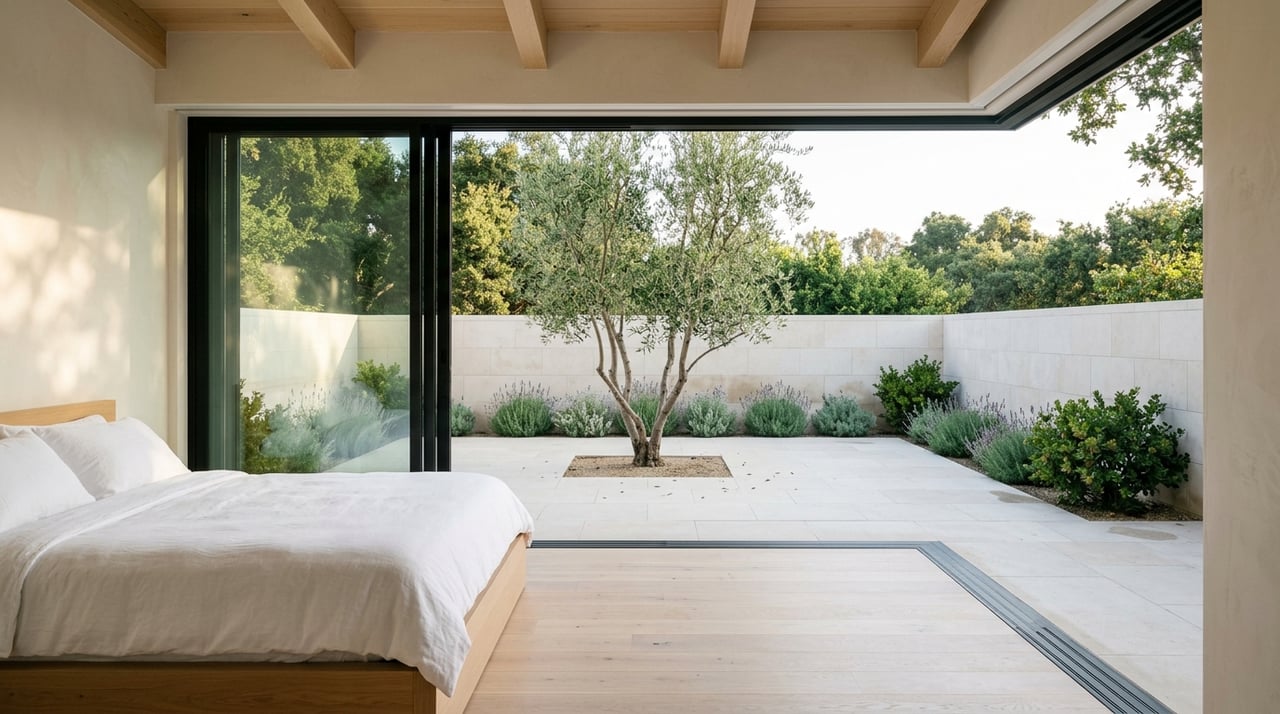
That is where editorial storytelling becomes essential. A well-positioned estate campaign should explain the property’s provenance, architectural pedigree, vineyard context, land stewardship, privacy, and indoor-outdoor living experience. In Napa, the setting already offers strong story assets, including preservation, terroir, design, and a globally recognized lifestyle.
This approach also reflects how major luxury platforms market exceptional homes. Sotheby’s International Realty reported global sales volume of US$182.4 billion in 2025, with a network spanning more than 1,100 offices across 86 countries and territories. The brand also reported about 42 million digital visits in 2025 and credits storytelling, digital strategy, and media collaboration as part of its success.
For sellers, the takeaway is clear. A globally marketable estate should be framed as a distinctive ownership opportunity, not just a property listing.
Broad exposure matters, but private outreach matters just as much. One of the biggest mistakes in luxury marketing is assuming that posting a home publicly is enough to reach the right buyer.
The 2025 international transactions report found that 72% of leads and referrals among agents working with foreign clients came from former clients, personal contacts, and business contacts. Websites and online listings accounted for just 15%.
That has real implications for Napa sellers. A serious global launch should blend public and private distribution, including:
If you are evaluating how your estate will be marketed, this is one of the clearest questions to ask. Not just where the listing will appear, but who will actively carry the story to qualified buyers and trusted intermediaries.
Global buyers often move quickly when the right property appears, especially cash buyers. At the same time, some buyers are blocked by availability, pricing, or financing. That means your launch should reduce friction before the property goes live.
The international transactions report found that among international clients who did not buy, the leading reasons were not finding a property available to purchase, the cost of properties, and inability to obtain financing. That makes readiness especially important. When your estate hits the market, the materials and the message should already be complete.
A strong pre-launch plan often includes:
Staging priorities also matter. According to the 2025 staging report, the living room, primary bedroom, and kitchen rank among the most important spaces to stage, followed by the dining room. For many Napa estates, outdoor areas are equally central because terraces, gardens, pools, and view corridors shape the lifestyle buyers are considering.
A global campaign is rarely a one-step event. It is usually a sequence that starts with preparation, builds through launch, and continues long enough for the right buyer to engage.
In Napa, timing can support that process. Visit Napa Valley highlights recurring visitor drivers such as harvest season, BottleRock, Auction Napa Valley, and year-round winery and culinary experiences. These moments help keep Napa visible in the minds of affluent travelers and repeat visitors.
That does not mean every home should launch on the same calendar. It does mean that timing should be intentional. A well-planned campaign can align market exposure with periods when Napa’s lifestyle story is already highly visible.
If you are selling a Napa estate with global potential, the agent’s reach and strategy matter as much as the home itself. Not every luxury presentation is truly global, and not every global pitch is backed by real relationships.
A smart screening process should focus on four areas:
For rare Wine Country properties, sellers often benefit from an approach that combines local expertise with selective international reach. That is especially true when provenance, privacy, land value, and design pedigree are central to the sale.
The strongest global marketing does not try to speak to everyone. It identifies the buyer most likely to value what your estate uniquely offers, then presents the property in a way that feels credible, aspirational, and complete.
In Napa, that often means marketing the home as a lifestyle asset, a legacy holding, or a private retreat shaped by one of the most recognized wine regions in the world. Scarcity, access, preservation, and storytelling all support that case. When those elements are handled thoughtfully, your estate is better positioned to stand out in a crowded digital world.
If you are considering selling a Napa estate and want a strategy built around discretion, presentation, and qualified global reach, Ginger Martin offers founder-led advisory and tailored marketing for exceptional Wine Country properties.

1229 Adams St. St. Helena CA 94574
1229 Adams St. St. Helena CA 94574