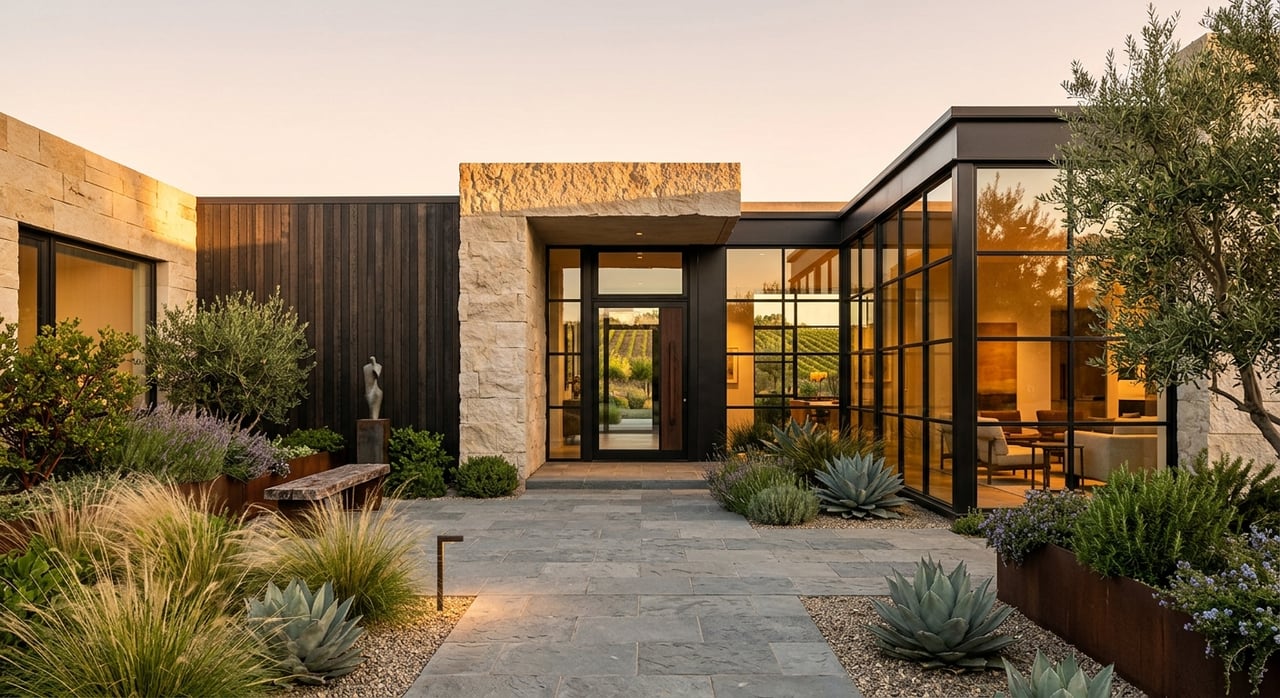
If you are drawn to clean lines, indoor-outdoor living, and architecture that feels quietly current, Napa can be a compelling place to look. The key is knowing that modern design is not spread evenly across the city. In Napa, contemporary homes tend to emerge in specific pockets shaped by infill planning, hillside settings, waterfront edges, and newer development patterns. Let’s dive in.
Napa’s housing story is layered. The city includes historic districts, established neighborhoods with gradual infill, and newer edge-of-city areas that have more room for recent development patterns to take shape.
That matters because modern homes in Napa are usually clustered, not universal. City planning materials point to compact development, corridor revitalization, and stronger links between downtown, neighborhoods, the river, and open spaces. In practical terms, that creates clearer opportunities for contemporary condos, mixed-use housing, custom hillside homes, and architect-led remodels in some areas more than others.
Napa’s broader architectural history also supports this mix. The region includes Craftsman, Mission Revival, Mid-century Modern, and Contemporary design, which helps explain why modern architecture can feel at home here, even within a city known for heritage and tradition.
If you are looking for Napa’s most natural city-core setting for contemporary housing, downtown and the riverfront stand out. Downtown Napa is a mixed-use district centered on the river and Oxbow, and city materials describe it as an area that has experienced a renaissance in development.
This is the part of Napa where modern design often shows up through condos, loft-style rehabs, and infill housing rather than large detached estates. The appeal is easy to understand. A more urban framework, a walkable setting, and a pattern of redevelopment can support homes with cleaner lines, updated materials, and a more contemporary feel.
For buyers who want a Napa home that feels current and connected, this area is often a smart place to watch. It aligns with the city’s larger focus on compact development and stronger downtown connections.
Central Napa and the Soscol gateway are also worth paying attention to, especially if you are interested in where modern housing may continue to appear over time. Central Napa sits between Highway 29, Lincoln Avenue, Soscol Avenue, and downtown, while city planning identifies Lincoln & Soscol and Imola & Soscol as corridors targeted for revitalization.
This does not necessarily point to large concentrations of detached modern homes. Instead, it suggests a stronger case for mixed-use residential projects, smaller residential pockets, and contemporary infill tied to corridor change.
The city’s historic context also notes that the Soscol Gateway and East Napa character has been shaped by modern development over time. For a buyer, that means these areas may offer a more transitional design landscape where newer forms can sit alongside older commercial and residential patterns.
When you picture a one-of-a-kind modern home in Napa, hillside neighborhoods are often where that vision becomes most plausible. Alta Heights is described by the city as having varied architecture and sweeping city views, which makes it one of the clearest settings for site-responsive contemporary design.
In neighborhoods like this, modern architecture often works because the land itself asks for a tailored response. Sloped lots, view corridors, and the need to frame light and landscape can all favor custom design, thoughtful remodels, and architect-driven rebuilds.
If you are seeking a home with stronger design identity, this is one of the Napa settings where contemporary living can feel especially natural. The architecture is often less about uniformity and more about how a home engages its site.
Browns Valley West shares some of that same hillside logic. The city describes it as primarily in the hills, with both newer and older development enjoying sweeping valley views.
That blend makes the area especially relevant for buyers who appreciate modern updates or newer homes in a scenic setting. Rather than expecting an entire neighborhood of contemporary residences, it is more accurate to think of Browns Valley West as a place where select properties may lean more modern because of their siting, age, or renovation history.
For design-minded buyers, that can be part of the appeal. You may find homes where architecture takes advantage of openness, outlook, and privacy without the neighborhood losing its overall Napa character.
If your definition of modern includes newer planning, more recent construction eras, or neighborhoods with identified development potential, Napa’s edge neighborhoods deserve attention. The city’s existing-conditions work highlights several non-historic designated areas with many potential development sites, including Riverpark, Sheveland Ranch, Terrace/Shurtleff, Browns Valley East, Westwood, Von Uhlit Ranch, and Stonehouse.
These areas are among the strongest city-identified settings to mention when talking about where modern homes may emerge. They do not guarantee a specific inventory type, but they do reflect parts of Napa where newer housing patterns are more likely than in preservation-focused districts.
Two neighborhoods stand out in particular. Riverpark is described as a waterfront community, and Von Uhlit Ranch is identified as one of Napa’s most recently developed neighborhoods. For buyers who want a home that feels newer in layout, materials, or neighborhood context, these are especially relevant places to explore.
A modern Napa home is not always urban in expression. In some edge neighborhoods, the draw is the combination of newer development with open outlooks, vineyard adjacency, or broader landscape views.
City neighborhood materials note that Springwood Estates has vineyard-backed lots with broad views, while Vineyard Estates was once agricultural land and now includes homes with hill and vineyard outlooks. These settings can be appealing if you want contemporary living with a more expansive Wine Country feel.
For buyers at the luxury end of the market, this is often where Napa’s modern design story becomes most compelling. The home is not just about finishes or style. It is about how architecture, setting, and privacy come together.
Not every Napa neighborhood is a natural fit for contemporary new construction. Historic districts play an important role in the city’s identity, and that shapes what is likely to happen there.
Napa Abajo and Fuller Park are National Register historic neighborhoods with many period homes, and the city’s Heritage Napa materials point to design guidelines that regulate alterations and new construction in historic districts. That means these areas are generally better understood as places where homes are restored, sensitively expanded, or carefully adapted.
If you love modern design, historic neighborhoods can still be appealing. You may find updated interiors or thoughtful additions. But if your goal is a distinctly contemporary new-build look, these areas are usually less likely to provide it.
If you are searching for modern design in Napa, it helps to begin with the right map. Downtown infill areas, revitalization corridors, hillside view neighborhoods, and newer edge communities are the most credible places to focus your search.
It also helps to define what “modern” means to you. In Napa, that might mean a downtown residence with a loft-like feel, a custom hillside home shaped around views, or a newer property with a cleaner palette and more open floor plan. The housing stock is varied, so your version of contemporary living may appear in different forms depending on the setting.
The most successful search usually balances architecture with context. A home may feel modern because of its design, but also because of how it connects to the river, the hills, vineyard views, or a more recent neighborhood plan.
Napa’s contemporary housing story is best understood through pattern, not assumption. The city’s own planning language supports a selective view of where modern homes are most likely to emerge, and that perspective is useful whether you are buying for full-time living, a Wine Country retreat, or long-term architectural value.
That is especially true in a market where design pedigree and setting can matter just as much as square footage. Knowing which neighborhoods support new infill, which ones favor site-specific architecture, and which ones prioritize preservation can help you search with more confidence and better expectations.
If you are considering a design-forward purchase in Napa, a tailored strategy matters. The right opportunity may be downtown, on a hillside, near the waterfront, or in one of the city’s newer edge neighborhoods, but the path is clearer when you understand how Napa actually grows.
If you would like a more nuanced view of architecturally significant and contemporary opportunities in Napa, Ginger Martin offers discreet, highly personalized guidance grounded in deep Wine Country market knowledge.
1229 Adams St. St. Helena CA 94574
1229 Adams St. St. Helena CA 94574