Updated September 2026
Napa and Sonoma Wine Country holds far more than tasting rooms, and its trail system, hot air balloon launches, art institutions, geothermal spas, river outfitters, and hands-on cooking schools fill an entire week of plans that never touch a wine glass. Ginger Martin, who has represented luxury estates and vineyard properties across both valleys since 1996, sends her own clients to these exact spots between closings and open houses. This guide names only venues confirmed open now, since wildfire recovery and ownership changes have quietly closed or renamed several once-popular stops over the past several years. Visitors traveling with children will find a fuller roster in a companion guide to family-friendly Wine Country; the six categories below suit an audience more interested in a mud bath than a petting zoo.
Key Takeaways
- Bothe-Napa Valley State Park and the Table Rock Trail reward hikers with redwood canyons and volcanic ridgelines that predate every vineyard.
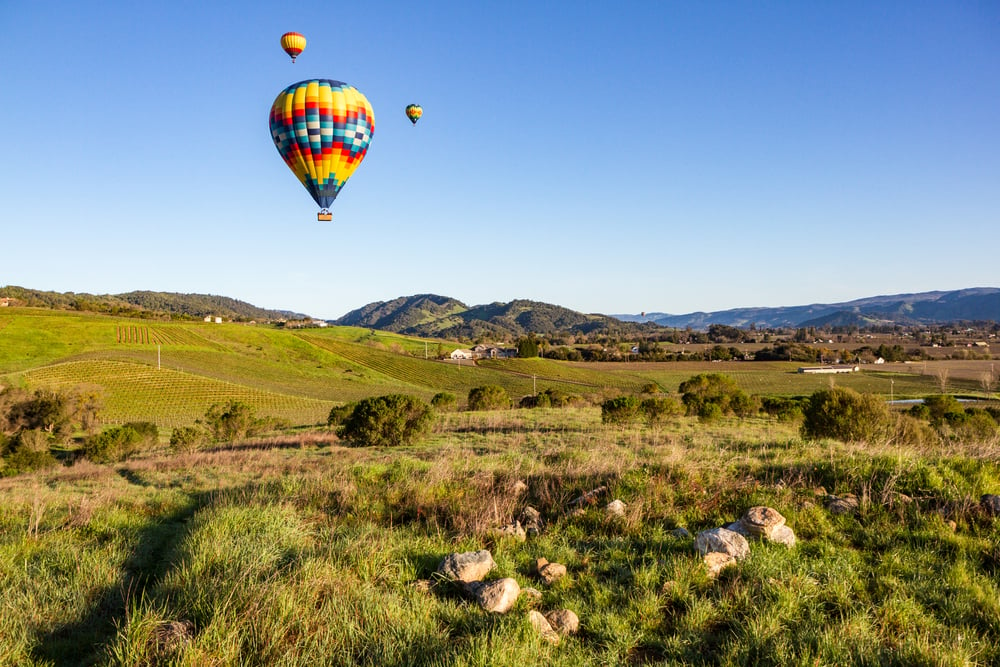
- Hot air balloons launch at sunrise from both the Napa side and the Sonoma side.
- di Rosa Center for Contemporary Art and the Sonoma Valley Museum of Art give the region a real art presence outside any tasting room.
- Calistoga's volcanic mud baths date back over a century; Osmosis Day Spa Sanctuary in nearby Freestone offers a rare alternative, a dry cedar enzyme bath.
- The Russian River near Healdsburg and CIA at Copia's cooking classes in downtown Napa round out a week that never requires a corkscrew.
Hiking Trails That Predate Every Vineyard in the Valley
Napa and Sonoma's public trail network reaches well beyond the vineyard rows, climbing through redwood canyons and up onto the volcanic ridgeline that forms the spine of both valleys. Several of the best trailheads sit within a twenty-minute drive of the valley floor. Together they cover four different kinds of terrain, from shaded creek bottoms to exposed volcanic rock.
Bothe-Napa Valley State Park
Bothe-Napa Valley State Park, just south of Calistoga, recovered fully from the Glass Fire and offers close to ten miles of trail shaded by second-growth redwood along Ritchey Creek. The park occupies the site of a nineteenth-century resort, and its old swimming pool and pioneer cemetery still sit just off the main trail. Ritchey Canyon Trail stays cool even in August, a favorite for anyone hiking after a morning of appointments in nearby Calistoga.
Table Rock and the Palisades Trail
The Table Rock Trail climbs out of Robert Louis Stevenson State Park above Calistoga and reaches one of the widest volcanic-rock viewpoints in either valley, passing an old obsidian flow near the summit. It connects onward to the Palisades, a rugged basalt ridge that draws serious hikers and climbers rather than casual walkers. A gentler introduction to similar terrain closer to town appears in this dedicated guide to hiking in St. Helena.
Best Time to Hike It
Locals hike Table Rock at first light. The exposed rock holds heat well into the afternoon, and the trailhead offers no shade for the first mile, so an early start matters more here than on almost any other trail in the region.
Jack London State Historic Park
Jack London State Historic Park in Glen Ellen pairs nearly thirty miles of trail with the ruins of the author's Wolf House and his original vineyard-era cottage. Its Fallen Bridge Loop and Lake Trail wind through oak woodland with almost no elevation gain, a welcome contrast to Table Rock. The park sits inside Glen Ellen, walking distance from the village's small handful of restaurants.
Sonoma Overlook Trail
The Sonoma Overlook Trail climbs directly from the historic Sonoma Plaza and reaches a ridge with views over the valley floor in under an hour. Its short length and central starting point make it the easiest trail here to fit before dinner. Visitors already exploring downtown Sonoma rarely need to drive anywhere to reach the trailhead.
Where Do Hot Air Balloons Launch Over Wine Country?
Balloon operators launch at dawn from two general areas: the Napa side near Yountville and the town of Napa, and the Sonoma side near Santa Rosa. The choice usually comes down to which valley a visitor is already staying in, since both sides offer near-identical flight times and champagne landings.
Launching From the Napa Side
Napa Valley Aloft, Napa Valley Balloons, and Balloons Above the Valley all fly out of launch fields near Yountville and Napa, drifting north over the valley floor as the morning fog lifts. Flights typically run about an hour in the air, and most operators pick up guests directly from hotels throughout the valley, including those near Yountville.
Launching From the Sonoma Side
Operators including Up & Away Ballooning and Wine Country Balloons launch from fields near Santa Rosa and drift over Sonoma Valley's vineyards and oak-studded hills. Flight paths change with the wind each morning, so no two rides cover exactly the same ground, and guests staying near Santa Rosa or Sonoma often prefer this side simply to skip the drive.
Local Tip: Book balloon flights for September or October if the schedule allows. Summer mornings often carry marine fog that delays launches until midday, while fall mornings clear by sunrise, when the surrounding vineyards look their best from the air.
Art and Museum Venues Away From the Tasting Room
Napa and Sonoma support a genuine art scene that has nothing to do with a winery's private collection. Two institutions in particular give the region real weight: one built around a single collector's estate, the other anchored to a historic town plaza.
di Rosa Center for Contemporary Art
di Rosa occupies a former sheep ranch off Highway 121 and holds one of the largest collections of Northern California art anywhere, spread across galleries, a sculpture garden, and a thirty-five-acre lake. Founder Rene di Rosa began collecting from local artists in the 1960s, long before most of them became known outside the region. Pair a visit with this roundup of Napa's top art galleries for smaller commercial spaces downtown.
Sonoma Valley Museum of Art
The Sonoma Valley Museum of Art sits a short walk from the Sonoma Plaza and rotates its exhibitions several times a year, mixing regional artists with traveling shows. Its scale stays intentionally modest, which makes an hour there easy to fit between a morning hike and a late lunch. Its location inside downtown Sonoma keeps it walkable from most of the town's hotels.
What Makes Calistoga's Hot Springs Different From a Typical Spa Day?
Calistoga sits directly on a geothermal fault line, and its bathhouses draw real volcanic ash and mineral water rather than importing product-based treatments. That geology, not marketing, is what separates a Calistoga mud bath from a standard massage-and-facial spa menu found almost anywhere else.
Indian Springs Calistoga
Indian Springs draws from Calistoga's original 1860s hot springs resort and maintains California's largest naturally geyser-fed pool, with a treatment menu still centered on the volcanic ash mud bath that first drew visitors to town.
Dr. Wilkinson's Backyard Resort & Mineral Springs
Dr. Wilkinson's has operated as a Calistoga fixture since the early 1950s, keeping its mud bath formula close to the original recipe of volcanic ash, peat, and mineral water. Three soaking pools at different temperatures let guests move through a full circuit rather than a single soak.
Osmosis Day Spa Sanctuary
Osmosis, in the small town of Freestone in western Sonoma County, replaces the mineral soak entirely with a dry cedar fiber enzyme bath, a treatment few other spas in the country offer. A Japanese-style garden surrounds the property, giving the visit a quieter register than Calistoga's bathhouses. See this guide to the best spas in Napa Valley for a fuller comparison of treatment types and price points.
Local Tip: Book any Calistoga mud bath for a weekday morning in January or February. Locals treat that window as the town's quiet season, appointments open with almost no wait, and several resorts drop their rates before spring travel returns.
Kayaking and Canoeing the Russian River
The Russian River, winding through Healdsburg on its way to the Sonoma Coast, gives paddlers calm, shallow water through the summer months. River's Edge Kayak and Canoe and Russian River Adventures both run seasonal trips from spring through early fall, with sandbar stops for a swim or a picnic along the way. Water levels shift year to year with rainfall, so a call ahead in early season is worth the extra step. Guests based near Healdsburg can reach most put-in points in under fifteen minutes, and several outfitters run shuttles back to the start for one-way trips.
Where Can Visitors Take a Hands-On Cooking Class in Wine Country?
The Culinary Institute of America at Copia, inside downtown Napa's restored Copia building, runs public Boot Camp classes and demonstration dinners taught by CIA-trained chefs, open to anyone regardless of skill level. The building first opened in 2001 as a nonprofit food and wine center, closed in 2008, and reopened under CIA management in 2016.
Classes range from a single afternoon session to multi-day intensives, and most groups leave with a printed recipe set and a genuinely useful knife skill. The building sits inside Napa, a short walk from the Oxbow district's restaurants, making a class easy to pair with dinner reservations the same evening.
Building a Wine Country Visit Around More Than the Cellar
None of the six categories above require a single winery stop, though most sit within a short drive of one. Ginger Martin keeps a running list of her own favorite stops across both valleys, updated as venues open and close, on her Ginger Faves page. Buyers weighing property across Napa Valley or Sonoma Valley often find that a nearby trailhead or a walkable art museum shapes a neighborhood decision as much as any vineyard view does.
Anyone weighing a move into the region, rather than just a weekend visit, can reach Ginger Martin directly to talk through neighborhoods, current inventory, and timing.