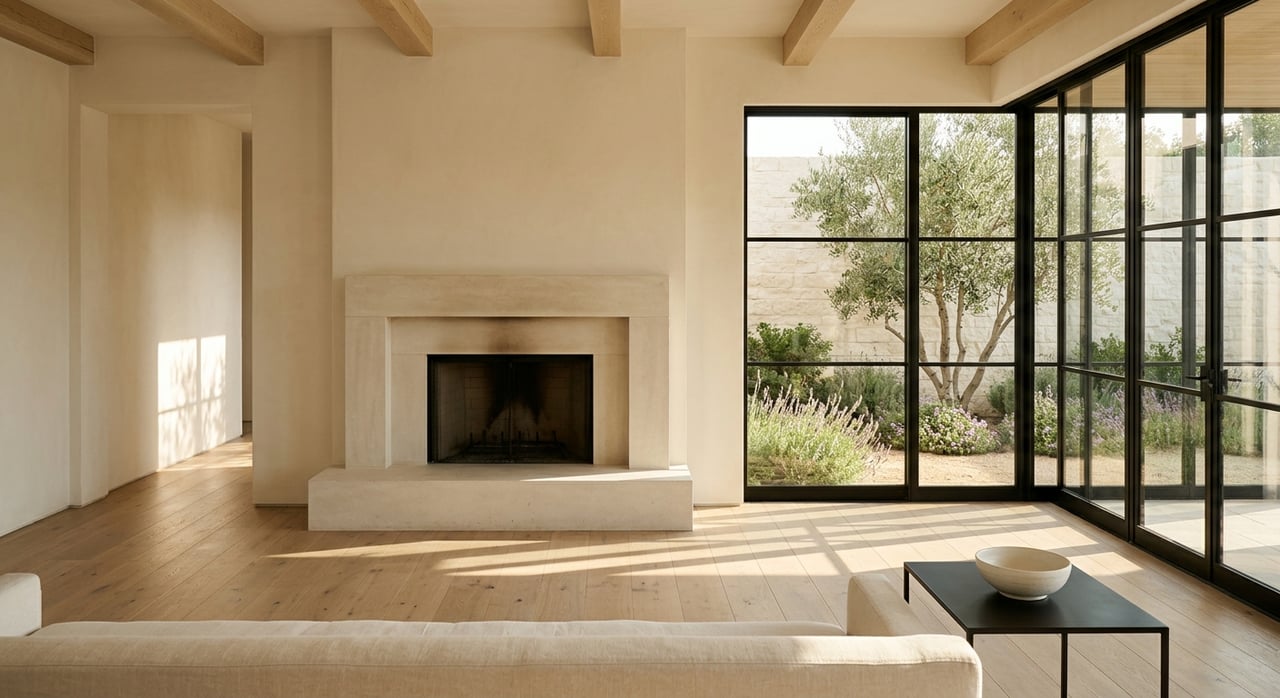
If you picture Sonoma luxury as one look, you will miss what makes this market so compelling. In Sonoma, a refined cottage near the Plaza and a vineyard estate set against the valley can both belong in the same luxury conversation. Understanding those differences helps you buy or sell with more clarity, so let’s take a closer look.
Sonoma’s architectural story begins in and around the historic Plaza. The City of Sonoma says the eight-acre Plaza was laid out by General Mariano Vallejo in 1835, is the largest of its kind in California, and became a National Historic Landmark in 1961. That historic center still shapes how many people experience Sonoma today.
The city’s preservation framework also helps explain why the built environment feels so distinct. Downtown Sonoma includes a layered mix of civic, commercial, and residential resources, with one- to three-story buildings and materials such as brick, adobe, wood siding, and textured stucco. Porches, balconies, and varied roof forms all contribute to the town’s visual character.
For luxury buyers and sellers, this means style in Sonoma is rarely just about the house alone. It is also about how a home relates to the street, the landscape, and the larger architectural rhythm of the area. In the strongest properties, those elements work together as one composition.
Near the Plaza, luxury often appears in a more village-scaled form. These homes may not be estate-sized, but they offer architectural charm, a strong sense of place, and close connection to Sonoma’s historic core. For many buyers, that combination feels every bit as valuable as acreage.
The city’s guidelines describe several signature styles in and near the historic district. Together, they create a streetscape that feels layered rather than uniform. That variety is one of Sonoma’s defining strengths.
Vernacular cottages are among Sonoma’s most approachable and enduring home types. The city describes them as simple, functional homes that are typically one to one-and-a-half stories, often with raised first stories, front porches, wood siding, and shallow front yards.
You will also see gable, hip, or cross-gable roofs and traditional double-hung windows. In the luxury market, these homes often appeal to buyers who value authenticity, scale, and a more intimate relationship to downtown Sonoma. Their charm comes from proportion and restraint rather than grandiosity.
Sonoma’s Queen Anne examples are often cottage-scale rather than large mansions. Even so, they bring a more decorative and expressive style to the local mix. The city notes key features such as steeply pitched gables, asymmetrical massing, towers, patterned shingles, and decorative woodwork.
For buyers, these homes can offer a strong sense of individuality. For sellers, architectural detail is often part of the home’s story, especially when original design elements remain prominent. In Sonoma, that kind of visual texture can stand out in a memorable way.
Craftsman bungalows are one of Sonoma’s most recognizable early-20th-century domestic forms. According to the city’s guidelines, they are defined by low-pitched gabled roofs, wide eaves, exposed rafters, tapered square columns, and generous porches.
This style often resonates with buyers who want warmth and architectural substance without formality. Craftsman homes tend to feel grounded and livable, with details that support both character and comfort. In a luxury context, that can be especially appealing when the home has been carefully updated while respecting its original form.
Sonoma also has a deep connection to Spanish Colonial and adobe traditions, along with Mission Revival and Monterey Colonial forms. The city’s preservation guidance points to defining features such as adobe or stucco walls, low-pitched or flat roofs, tile roofs, arches, balconies, and courtyard-centered living.
These styles feel especially at home in Sonoma because they connect so naturally to the region’s history and climate. Courtyards, shaded porches, and thick-walled materials support a lifestyle that is both indoor-outdoor and place-specific. Monterey Colonial is also identified by the city as a popular variant in Sonoma and elsewhere in Northern California.
Farther from the Plaza-centered core, Sonoma’s residential fabric becomes more varied. The city’s planning areas outside the historic center include landscaped front yards, rear garages or outbuildings, and a wider range of styles, including Monterey Colonial, Mission Revival, Folk Victorian, Ranch, Craftsman, and Contemporary.
This broader mix gives buyers more choice in how they want to live. Some prefer the scale and texture of an established in-town setting. Others are drawn to larger parcels, more privacy, and architecture that opens more fully to the landscape.
Ranch architecture has deep California roots. Sonoma’s preservation guidelines note that the style originated in California in the mid-1930s, gained popularity in the 1940s, and dominated U.S. housing in the 1950s and 1960s.
In Sonoma, Ranch homes typically emphasize one-story horizontality and a relaxed connection to the site. In the luxury segment, the best examples often feel easy and expansive, with patios, mature landscaping, and a plan that supports seamless outdoor use. They can be especially compelling for buyers who want understated design with strong livability.
Mid-century modern reached its peak from 1945 to 1965, and Sonoma’s guidelines associate it with horizontality, strong geometric forms, and large windows. These homes can feel especially striking in Wine Country because they often frame landscape, light, and long views so effectively.
For buyers who value design pedigree, a true mid-century home can offer clean lines and a strong architectural point of view. For sellers, preserving that clarity of form matters. In this style, simplicity is often the signature.
Contemporary homes add another important layer to Sonoma luxury. The city describes them as newer buildings that may borrow selected cues from older Sonoma forms while distinguishing themselves through materials and scale.
That matters because not every newer home fits neatly into a historic category. Sonoma’s preservation guidance explicitly recognizes mixed-style buildings as part of the city’s architectural variety. In practice, many newer luxury homes work best when they respect local scale, draw from regional materials, and still feel clearly of their own time.
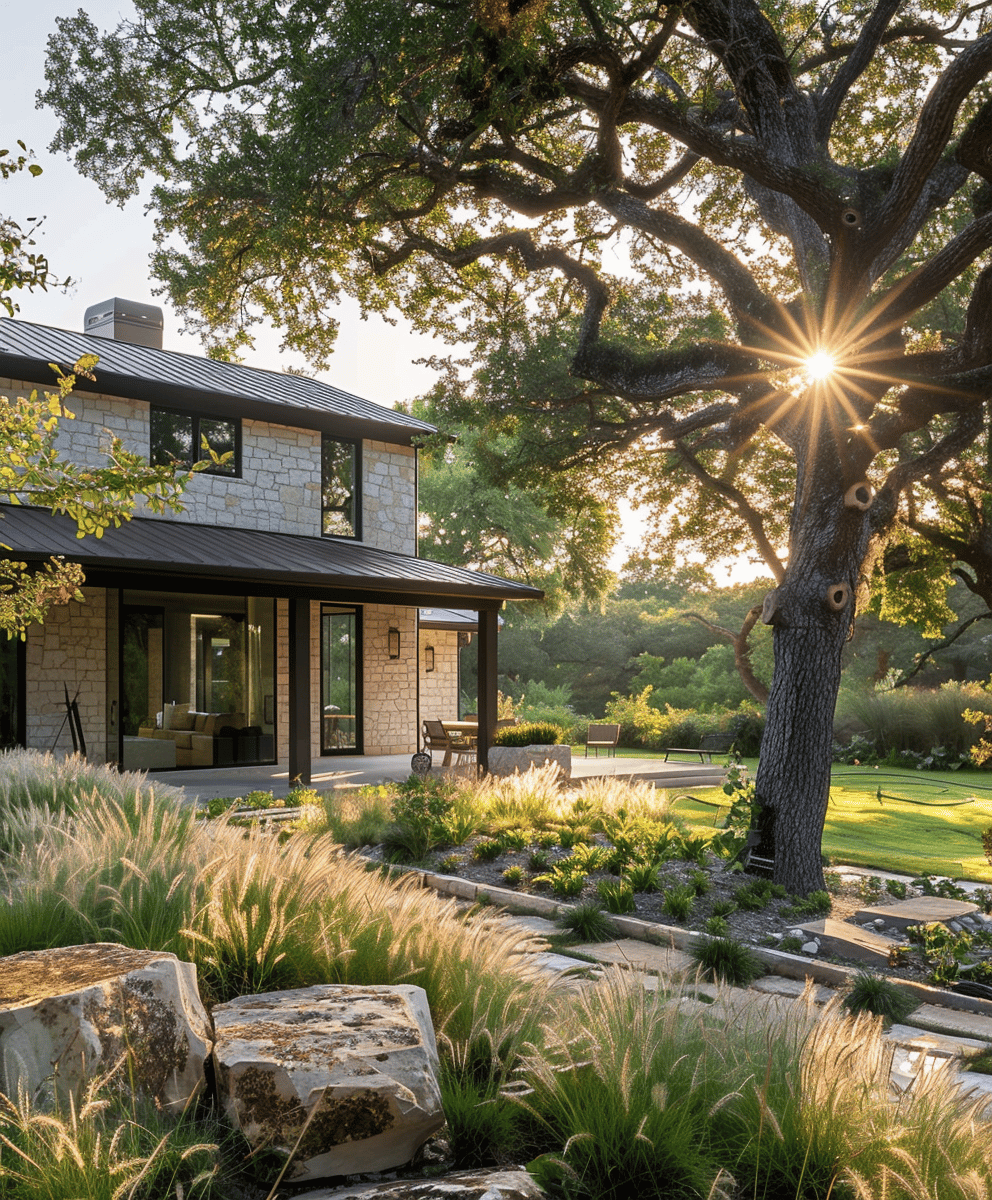
If Plaza-area homes represent Sonoma’s intimate side, vineyard estates show its broader, more dramatic scale. These properties are often shaped by views, privacy, land, and a strong relationship to outdoor living. They are less about fitting into a traditional streetscape and more about responding to site.
That response is not arbitrary. Sonoma County’s climate is described by UC Master Gardeners as mild, with cool, wet winters and hot, dry summers, along with substantial microclimate variation across coast, valleys, hillsides, and sun exposure. Sonoma Valley is identified as part of the county’s coastal warm inland area, where vineyards are common and summer heat is driest and hottest.
NOAA’s 1991 to 2020 monthly normals for the Sonoma station show 28.35 inches of annual precipitation, with rainfall concentrated in winter and essentially no rain in July and August. That pattern helps explain why luxury properties in Sonoma so often emphasize shade, courtyards, terraces, and drought-aware landscape design. The site itself becomes part of the architecture.
The wine-country setting is also reflected in official appellation geography. The TTB lists the Sonoma Valley AVA as established in 1981, Sonoma Mountain AVA in 1985, and Moon Mountain District Sonoma County in 2013. For many buyers, that recognized vineyard context adds another layer of identity to estate living in Sonoma.
In Sonoma, outdoor space is not just an amenity. It is a core part of how a home lives. The city’s preservation guidelines say landscape design ties together the built environment, front yards create a transition between street and house, and plantings should provide shade and green space.
The same guidance encourages drought-resistant plantings, mature trees, semi-permeable surfaces, and outdoor spaces such as courtyards and semi-public seating areas when compatible with the site. In practical terms, that supports a Sonoma luxury standard where porches, patios, and landscaped grounds are integral to the overall experience.
For estate properties, outdoor living may include view-oriented terraces and courtyard arrangements that respond to sun, breeze, and privacy. For in-town homes, it may be a porch, a shaded garden edge, or a compact courtyard that feels proportionate to the house. In both cases, the goal is the same: architecture and landscape should feel unified.
If you are buying in Sonoma, it helps to start with the design instinct that fits your lifestyle. Broadly speaking, Sonoma luxury often separates into two paths: historic-character homes with village scale, and estate properties shaped by land, views, and outdoor living. Neither is inherently better. They simply offer different kinds of value.
As you compare homes, pay attention to more than square footage. Consider how the architecture sits on the site, how outdoor spaces are used, and whether the materials and details feel consistent with the setting.
A useful checklist includes:
If you are selling in Sonoma, presentation should do more than show finishes. It should clarify the home’s architectural identity and its relationship to the land. In this market, provenance, setting, and design coherence often shape how buyers understand value.
That is especially important in or near sensitive historic areas. Sonoma’s preservation framework is designed to manage change while preserving historic character, so exterior updates in these locations should feel compatible with the house, the block, and the surrounding landscape.
Even outside the historic core, the strongest positioning usually highlights how architecture, site, and outdoor living work together. A gracious porch, mature trees, a well-placed terrace, or a courtyard with real purpose can be just as important to the story as interior materials. In Sonoma, luxury is often about composition rather than excess.
Whether you are drawn to a refined cottage near the Plaza or a vineyard estate that opens to long valley views, Sonoma rewards a careful eye. Its most compelling homes reflect not just style, but place, history, climate, and landscape in equal measure. That is what gives this market its staying power.
If you are considering a move, a sale, or simply want a more informed view of Sonoma’s luxury housing landscape, Ginger Martin offers discreet, high-touch guidance rooted in Wine Country expertise.
1229 Adams St. St. Helena CA 94574
1229 Adams St. St. Helena CA 94574