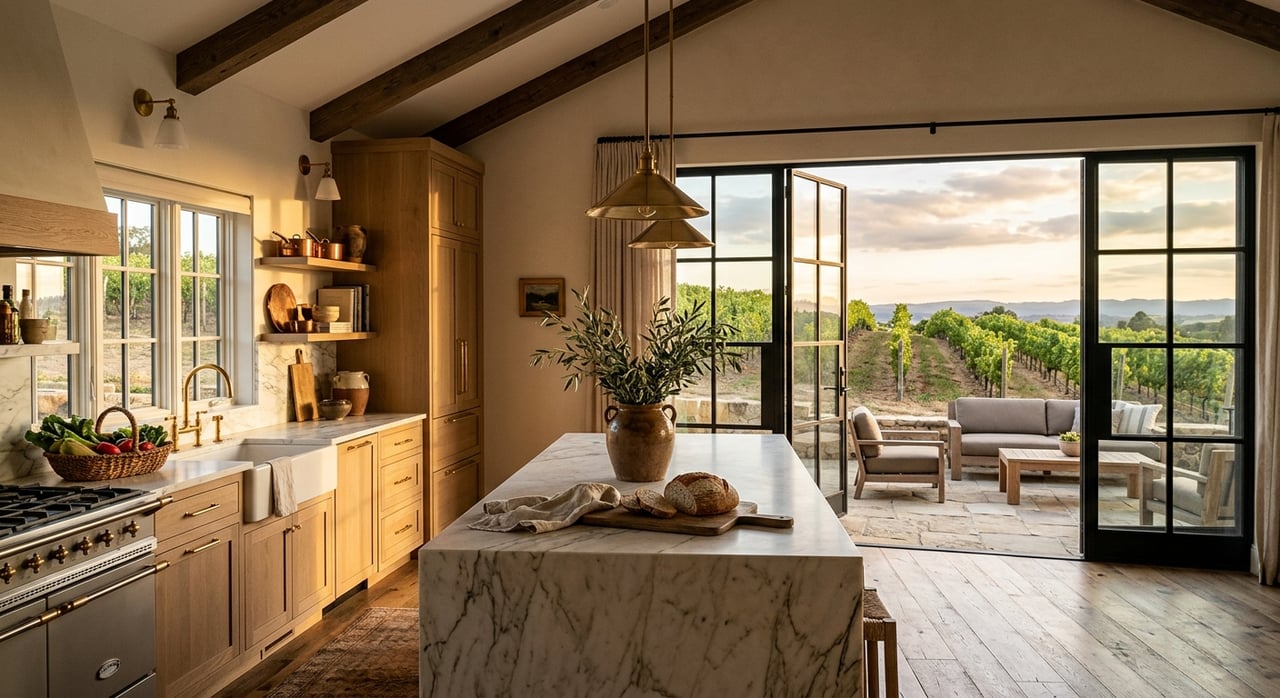
If you are looking at Rutherford vineyard estates, you are likely searching for more than a beautiful home. You are looking for a place with identity, lasting value, and a setting that feels unmistakably tied to Napa Valley. In Rutherford, that appeal comes from a rare mix of vineyard pedigree, protected rural character, and a lifestyle shaped by land, views, and history. Let’s dive in.
One reason Rutherford stands out is that it is not just a general wine country address. It is a federally established American Viticultural Area, or AVA, with a legally defined boundary in Napa County. That matters because the name Rutherford is tied to a specific place, with recognized origin and long-standing agricultural significance.
That sense of provenance runs deep. Napa Valley Vintners notes that Rutherford sits within the original Rancho Caymus land grant and took its name from Thomas Rutherford and Elizabeth Yount Rutherford. The same source states that Rutherford was officially recognized as an AVA in 1993 and is home to some of Napa Valley’s most historic and acclaimed vineyards and wineries.
For you as a buyer or property owner, this gives Rutherford a different kind of weight. An estate here is often understood not only as a residence, but as part of a larger story about terroir, cultivation, and Napa Valley legacy.
Rutherford sits on the valley floor at the widest part of Napa Valley, with elevations that generally range from about 155 to 500 feet. According to Napa Valley Vintners, the area is warm and sunny with cool evenings, a balance that has helped define its vineyard reputation. That climate profile supports both agricultural appeal and a comfortable rhythm of life across the seasons.
The district also has meaningful internal variation. The western benchland features sedimentary, gravelly, sandy, alluvial soils, while the eastern side includes more volcanic soils. Those differences shape how vineyard land is viewed and why certain sites carry strong appeal for serious buyers.
Rutherford is also known for being a little warmer than Oakville and Stags Leap to the south. Napa Valley Vintners describes the western bench as cooler and partly shielded from late-afternoon sun, while the eastern side offers more complex microclimates. In practical terms, that gives Rutherford a distinct place within Napa’s core valley-floor corridor.
You will often hear the phrase Rutherford Dust when people talk about this part of Napa Valley. In wine terms, it is local shorthand for the texture and tannin profile commonly associated with Rutherford Cabernet. Napa Valley Vintners connects that identity to the area’s soils, climate, and long winemaking tradition.
For real estate, that phrase signals something bigger than branding. It reflects the idea that this place has a recognizable character that people inside and outside the valley understand. That kind of site-specific identity can make a Rutherford estate feel more grounded, more legible, and more enduring than a rural property without the same agricultural and cultural context.
The Rutherford Dust Society reinforces this through its focus on land stewardship and high-quality grape growing. Its member materials repeatedly emphasize well-drained soils, exposure, and classic Cabernet expression. For a vineyard buyer, that helps explain why the land itself often carries as much interest as the residence.
Rutherford’s appeal is not only agricultural. It is also deeply experiential. Local examples highlighted by the Rutherford Dust Society describe properties that feel secluded, view-oriented, and shaped by the landscape around them.
These examples point to the features many buyers respond to most:
That combination is important. In Rutherford, privacy often comes with visual openness. You may feel tucked away among vines, oaks, and long view corridors, while still remaining connected to the broader Napa Valley lifestyle.
In Rutherford, scenery is not just a backdrop. It is part of the value story. Napa County’s Community Character Element states that the county includes about 280 miles of designated scenic roadways and nearly 100 historical wineries visible from those roads.
The county also has a viewshed ordinance intended to preserve scenic quality and protect ridgelines and hillsides from insensitive development. For estate owners, that planning framework helps support the visual integrity of the landscape. In a place like Rutherford, open views, vineyard context, and rural character are central to how a property is experienced.
That matters whether you are buying for personal enjoyment, legacy planning, or a long-term hold. When the county actively protects what makes the area visually distinctive, the setting becomes part of the estate’s lasting appeal.
Rutherford benefits from Napa County policies that direct housing and commercial growth toward incorporated or already urbanized areas. The county’s General Plan also protects agricultural, watershed, and open-space lands with 40- and 160-acre minimum parcel sizes in many areas. These policies help preserve the rural structure that buyers often seek in Wine Country.
This does not mean every property is the same or that every parcel has the same potential. It does mean the broader land-use framework favors stewardship, agricultural continuity, and scenic preservation. That is a big reason Rutherford estates are often seen as scarcity assets as well as lifestyle properties.
If you are evaluating long-term value, this context matters. In Rutherford, the relationship between house, vineyard, view, and land-use protections often carries more weight than square footage alone.
For many buyers, it helps to understand Rutherford in relation to its neighbors. Napa Valley Vintners describes Oakville as another valley-floor Cabernet district, but one with more fog and breeze influence. St. Helena, by contrast, is described as a narrower northern valley-floor corridor that is generally hotter, with occasional morning fog and more limited cooling.
Rutherford sits between those impressions in a way that feels highly specific. It is broader, benchland-influenced, and known for a balance of warmth and structure. That distinct identity is one reason the area remains so compelling to buyers who want a property that feels unmistakably rooted in Napa Valley.
Not every buyer is looking for the same thing, but Rutherford tends to attract people who care about authenticity, privacy, and a strong sense of place. Often, the most memorable properties are the ones where the estate feels fully integrated with the land.
Characteristics that often stand out include:
Napa Valley Vintners also notes that Rutherford includes both iconic estates and larger vineyard holdings. That mix gives the area a unique identity. It can feel personal and private, while also carrying institutional importance within Napa’s wine landscape.
When you look closely, Rutherford’s appeal is remarkably consistent. It combines legally recognized origin, long agricultural history, distinctive terroir, scenic protection, and a highly specific estate lifestyle. Few places in Napa Valley bring those elements together in quite the same way.
That is why buyers are often drawn to Rutherford for more than one reason at a time. You may begin with the goal of finding privacy or vineyard frontage, then realize the area’s deeper appeal lies in its coherence. The land, the views, the agricultural character, and the historic identity all reinforce one another.
For discerning buyers and sellers, that coherence matters. It is what gives a Rutherford vineyard estate its sense of authenticity, and why the area continues to hold such strong appeal in Napa Valley.
If you are considering a Rutherford estate, thoughtful guidance matters. Working with a team that understands vineyard land, provenance, privacy, and the nuances of Wine Country value can help you assess what truly makes a property special. To start a confidential conversation, connect with Ginger Martin.

1229 Adams St. St. Helena CA 94574
1229 Adams St. St. Helena CA 94574